
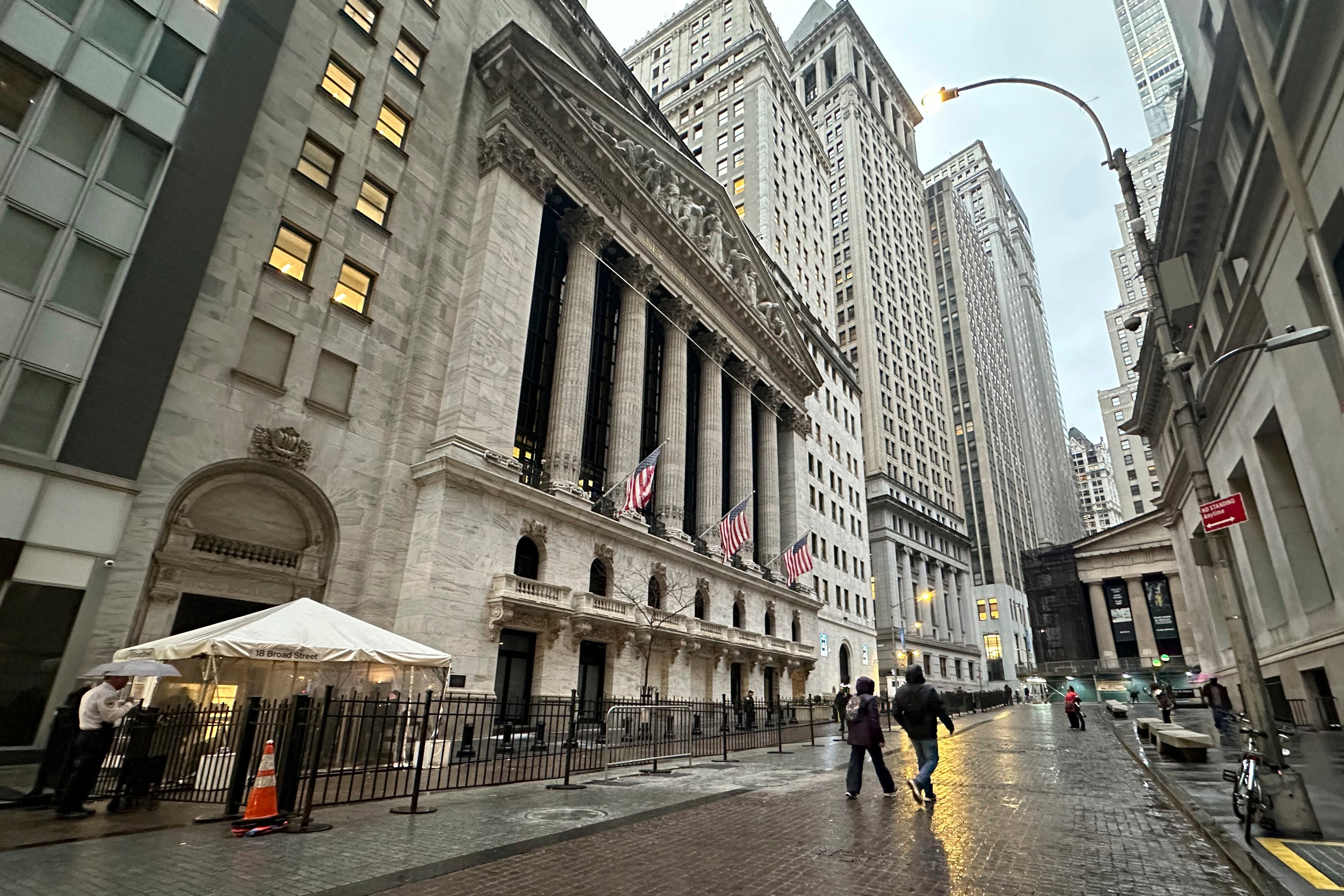


The relationship between politics and financial markets has always been intricate, yet the reemergence of former President Donald Trump in the political arena is generating new ripples across Wall Street. Due to his continued impact on crucial sectors, regulatory discussions, and investor attitudes, Trump’s involvement is once more demonstrating its powerful effect on the market—potentially causing subtle but meaningful changes in Wall Street’s dynamics.
Although the expression “disrupting Wall Street” might seem exaggerated, it’s clear that Trump’s policies, discourse, and the uncertainty of his political journey have left a lasting impact on the financial scene. From altering market projections to questioning the traditional link between political stability and market results, his effect is both atypical and widespread.
One of the most evident ways Trump has influenced Wall Street is by altering how markets interact with news cycles. Historically, markets would respond to economic signals, central bank policies, and company profits. However, during Trump’s time in office—and even after—market trends have shifted to react more to political news, social media posts, and judicial decisions. This pattern persists now, with investors monitoring not just economic statistics but also Trump’s legal issues, campaign events, and possible policy plans if he were to regain office.
Trump’s reemergence on the political stage also raises questions about regulatory uncertainty. During his administration, the rollback of regulations in sectors like energy, banking, and telecommunications was welcomed by many investors. However, the possibility of another Trump term creates a new kind of unpredictability—not necessarily about deregulation, but about how drastically federal policy could shift. For markets that value stability and predictability, this uncertainty can introduce volatility.
Moreover, Trump’s views on the Federal Reserve have shaped broader public discourse around monetary policy. His frequent criticisms of interest rate hikes and calls for more aggressive monetary easing during his presidency challenged the traditional independence of the central bank. Today, with inflation, rate changes, and Fed leadership still under scrutiny, Trump’s influence continues to echo through the financial system, shaping expectations and stirring debate among investors.
Another way Trump has indirectly altered Wall Street is through the politicization of corporate behavior. Under his influence, the line between business decisions and political positioning has blurred. Companies increasingly find themselves navigating not just market expectations but also political alignment. Whether it’s decisions on where to locate headquarters, what social causes to support, or how to respond to government policy, corporations are now being judged through both economic and political lenses.
Este entorno ha provocado un aumento en la polarización de las estrategias de inversión también. El incremento de inversiones impulsadas por ideologías, como ESG (Ambiental, Social y de Gobernanza) en la izquierda y fondos anti-ESG o “patrióticos” en la derecha, refleja una tendencia creciente donde las decisiones financieras están influenciadas por la identidad política. La oposición contundente de Trump a los principios ESG y su respaldo a las industrias de energía y manufactura tradicionales han contribuido a alimentar esta división, dando lugar a enfoques de inversión que son tanto sobre valores como sobre rendimientos.
The Trump effect also extends to market speculation and risk perception. The meme stock craze, the rise of retail investors emboldened by anti-establishment sentiment, and the increasing distrust of institutional narratives all reflect a broader shift in market psychology. Many of these shifts gained traction during Trump’s tenure, where distrust of traditional media, government institutions, and financial elites was frequently amplified. As a result, market participants today operate in an environment where narratives can move faster than fundamentals—and where political allegiance can influence investor behavior just as much as earnings reports.
Technology and social media have only magnified this effect. Trump’s digital presence—whether on legacy platforms or newer social networks—continues to command attention, making him a central figure in the real-time news economy that drives investor sentiment. Every headline, post, or court ruling has the potential to impact sectors like defense, energy, media, or tech, depending on the perceived implications of Trump’s positions or policy prospects.
There’s also a broader macroeconomic dimension to consider. Trump’s “America First” trade policies, emphasis on tariffs, and tensions with global trading partners reshaped global supply chains and investor expectations. These disruptions remain relevant today as companies and countries continue to reassess economic dependencies, diversify sourcing, and reevaluate exposure to geopolitical risk. The decoupling of global trade, partly rooted in Trump-era policies, continues to shape investment strategies and risk assessments on Wall Street.
As Trump remains a dominant figure in American politics, especially with the possibility of securing the Republican nomination for the next presidential election, markets must continue to factor his influence into their models. Whether he ultimately returns to the White House or not, his ability to sway public opinion, influence economic debate, and disrupt the status quo makes him a variable that financial analysts cannot afford to ignore.
To be clear, Trump alone has not “broken” Wall Street in the literal sense. The markets remain operational, resilient, and deeply interconnected. But his imprint has contributed to a new era in which political drama is inseparable from financial analysis. Investors are now forced to consider not only the fundamentals of business and the levers of economic policy but also the unpredictable nature of political personalities who can drive or derail market narratives overnight.
In this evolving landscape, the definition of market risk has expanded. Traditional concerns—such as interest rates, inflation, and earnings—must now be considered alongside political volatility, ideological shifts, and the rise of social media-fueled speculation. Trump’s role in this transformation is undeniable. He has, in many ways, challenged the orthodoxy of how markets interpret information and price risk.
As Wall Street adapts to this new reality, investors may need to recalibrate their expectations, tools, and assumptions. Whether this environment proves sustainable or destabilizing will depend on a range of factors, including how political power is wielded in the coming years and whether markets can maintain confidence amid ongoing uncertainty.
What is clear, nonetheless, is that Trump’s impact has altered the dynamics between finance and politics. While he may not have dismantled Wall Street, he has unquestionably transformed it.