


Throughout the ages, male artists have frequently been highlighted, overshadowing numerous innovative female creators. Even though they have made remarkable contributions, women have often been overlooked in exhibitions, academic materials, and scholarly discussions. Nevertheless, many of these women were not merely contributors to the artistic movements of their day—they were trailblazers, exploring form, color, ideas, and methods well ahead of when their male peers gained recognition for comparable breakthroughs.
The 20th century witnessed a gradual shift in how women were perceived in the world of fine art, but this recognition came slowly and unevenly. Women artists pushed boundaries, broke norms, and expanded the definitions of visual expression, yet they rarely received the attention they deserved during their lifetimes. Today, a growing number of curators, collectors, and scholars are revisiting these overlooked figures, giving them the credit long denied.
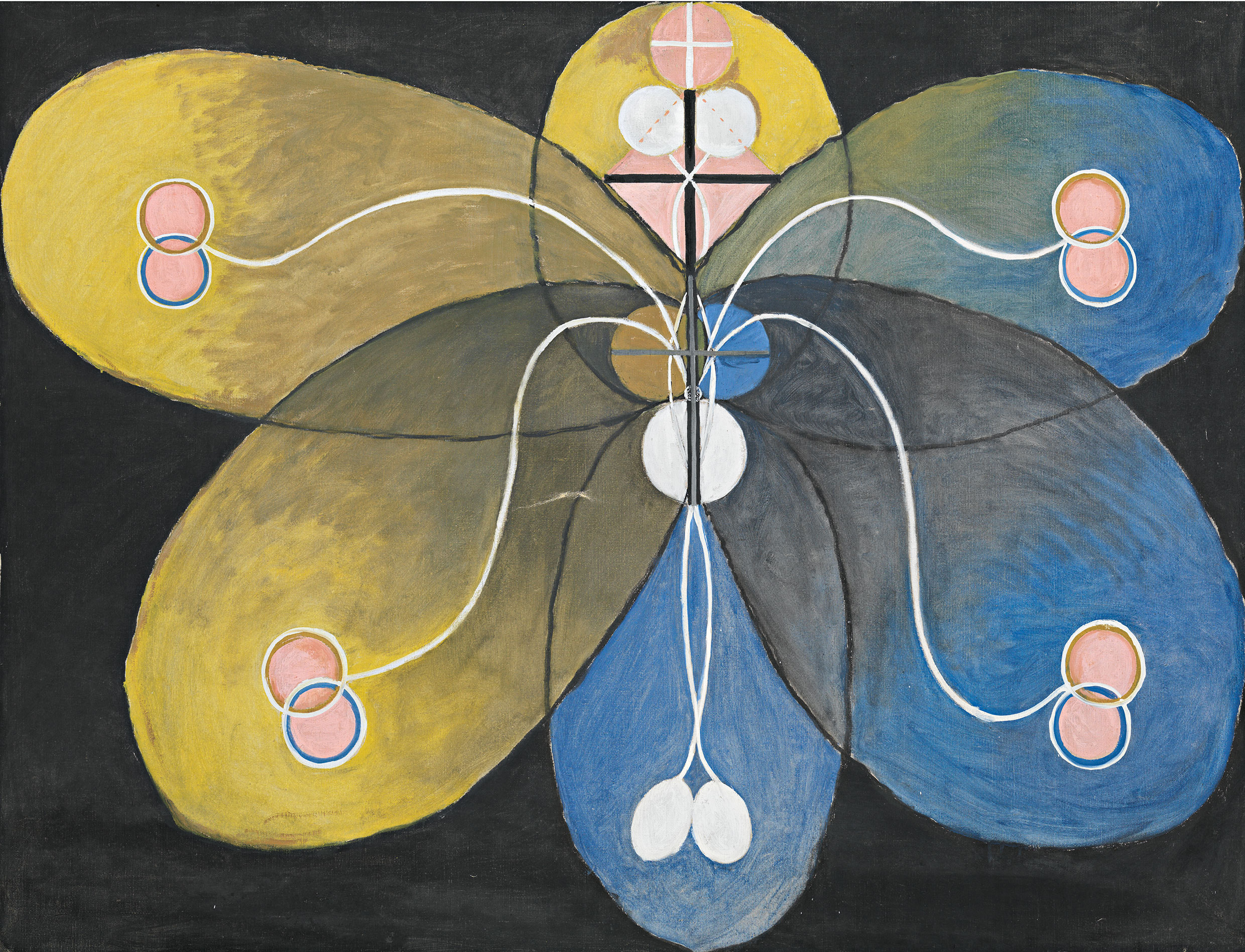
Consider Hilma af Klint, a Swedish painter whose abstract works predated those of Kandinsky and Mondrian by several years. Her large-scale, vividly colored canvases incorporated spiritual and philosophical symbolism, charting a path for non-representational art that would only be acknowledged decades later. Af Klint’s paintings, created in isolation and hidden for decades at her own request, are now considered foundational in understanding the roots of abstraction.
Similarly, the American artist Alice Neel challenged the mid-20th century modernism’s trend of cold detachment by focusing on intense, emotional portraits. During a period when abstract expressionism was prevalent in New York’s art scene, Neel stayed true to figurative art. Her paintings vividly depicted the essence of her subjects, frequently featuring political activists, artists, and ordinary individuals, emphasizing both their uniqueness and common humanity. It was only in the latter part of her life that her art started to receive the acknowledgment it rightfully deserved.
Another overlooked innovator was Japanese-American sculptor Ruth Asawa, who created intricate wire sculptures that blurred the line between craft and fine art. Her delicate forms floated in space, casting mesmerizing shadows and offering a new language of movement and structure. Despite her accomplishments and involvement in civic arts education, Asawa’s contributions were marginalized for years, dismissed in part because of the medium she chose and the gendered perceptions of domestic artistry.
In Latin America, artists such as Lygia Clark and Mira Schendel emerged as critical voices within the avant-garde. Clark’s interactive, participatory works redefined the relationship between artist and audience, while Schendel’s exploration of language, material, and form challenged the limits of visual representation. Both artists were central to the intellectual and artistic movements in Brazil during the mid-20th century, yet international recognition only followed long after their deaths.
Artists like Lee Krasner, long overshadowed by her husband Jackson Pollock, also warrant reappraisal. Krasner was a formidable talent in her own right, whose rigorous approach to composition and bold, gestural brushwork contributed greatly to abstract expressionism. Her work not only stood independently of her husband’s legacy but also evolved in complex and deeply personal directions over time.
Es crucial reconocer que muchas de estas mujeres no solo contribuían a las tradiciones establecidas, sino que también estaban creando nuevas direcciones. Sus innovaciones surgieron de experiencias de vida únicas y con frecuencia reflejaban luchas sociales más amplias, como las cuestiones de género, identidad, desplazamiento e inequidad. La marginación que enfrentaban no era solamente institucional, sino también cultural, arraigada en cómo se enseñaba, exhibía y criticaba el arte.
The renewed enthusiasm for these female artists goes beyond restoring historical fairness. It transforms our perspective on the history of art as a whole. By reassessing the art canon to incorporate these individuals, we acknowledge that the development of modern and contemporary art was much more varied and energetic than once recognized.
Museums and galleries hold an essential part in this adjustment. Over recent years, there has been a growing push to spotlight the creations of overlooked women through exhibitions, purchases, and newly curated permanent displays. Nevertheless, systemic transformation is still gradual. A report from 2022 showed that under 15% of pieces in prominent museum collections across the United States were crafted by women artists—a statistic that demonstrates the significant progress yet to be made.
Educational institutions have a duty as well. Art history programs must progress from superficial inclusion to thoroughly embedding the impact of women as crucial to the story of art evolution. This involves considering the intersection of race, social class, and geographic location that adds complexity to the experiences of numerous women artists.
Art markets, similarly, are starting to address previous neglects. Artworks by women who were once overlooked are now achieving unprecedented auction prices, and a growing number of younger buyers are searching for works by female creators. Although financial acknowledgment alone cannot reverse years of disregard, it contributes to changing perceptions and raising awareness of these artists.
Importantly, the current generation of creators keeps finding inspiration from the achievements of these pioneers. Their narratives not only highlight the struggles encountered by women in artistic areas but also affirm the strength, foresight, and ability of creative expression to overcome obstacles.
In celebrating the women who were ahead of their time, the art world acknowledges a more complete and honest history—one that includes all voices and honors the innovations born from courage, resistance, and a relentless pursuit of creative truth.